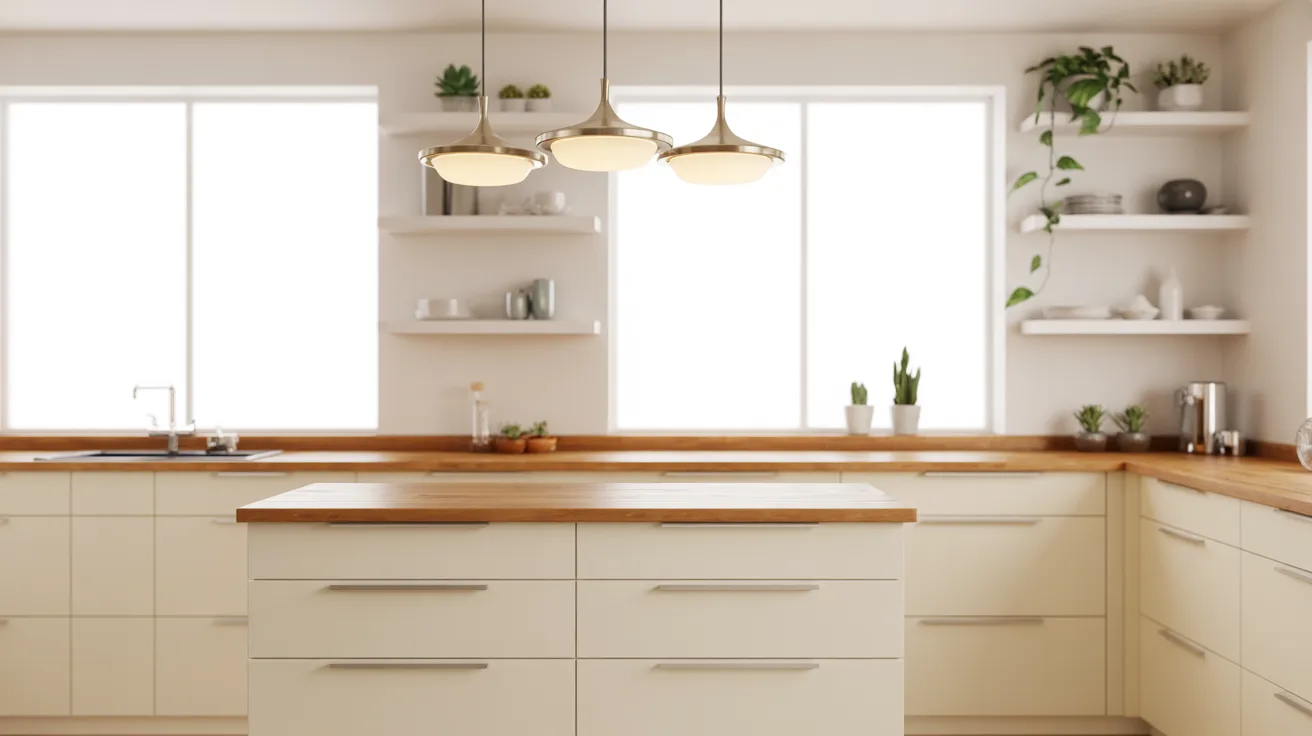
Getting the distance between floating shelves in the living room right makes a big difference. Too close, and things feel cramped.
Too far apart, and the wall looks empty. It’s a small detail that most people overlook until the shelves are already up.
I’ve been there. I once hung shelves without measuring, and everything looked off. That mistake taught me how much a little planning matters.
In this article, I’ll cover: Spacing guidelines for different items Room-specific tips for the living room How to measure and install shelves correctly
Why Proper Shelf Spacing Matters
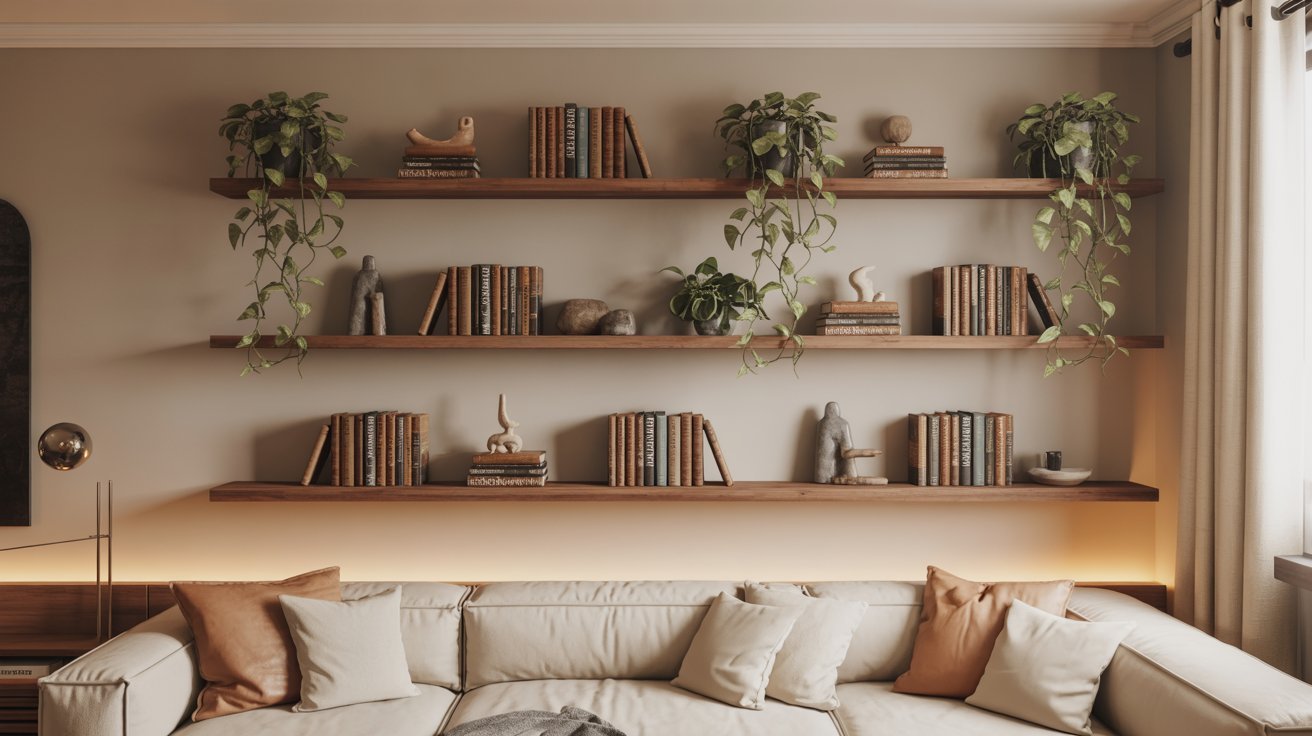
Good spacing keeps your shelves looking neat and working well every day.
When shelves are spaced right, you can reach items easily and keep the wall looking balanced. Everything has its place, and the room feels organized without much effort.
Poor spacing leads to clutter, sagging shelves, and items that are hard to access. Shelves that are too close together make the wall feel heavy.
Shelves that are too far apart leave the space looking bare and unfinished.
There is also a safety side to this. Overloaded or poorly spaced shelves can pull away from the wall over time.
Getting the spacing right from the start saves time, money, and a lot of frustration later.
General Guidelines for Distance Between Floating Shelves
Knowing the right measurements before you drill saves a lot of headaches.
Standard Spacing Recommendations
Start here before anything else.
Most floating shelves work best with 12 to 18 inches between them. For a general living room setup, 15 inches is a solid starting point.
Spacing for Small Decorative Items
Small items don’t need much room to shine.
For frames, candles, and small plants, 10 to 12 inches between shelves is enough. It keeps the display looking layered and intentional.
Spacing for Large Objects
Taller items need a little extra breathing room.
Books, tall vases, and larger decor need at least 14 to 18 inches. Measure the tallest item first and add 2 inches on top for clearance.
Room-Specific Floating Shelf Spacing
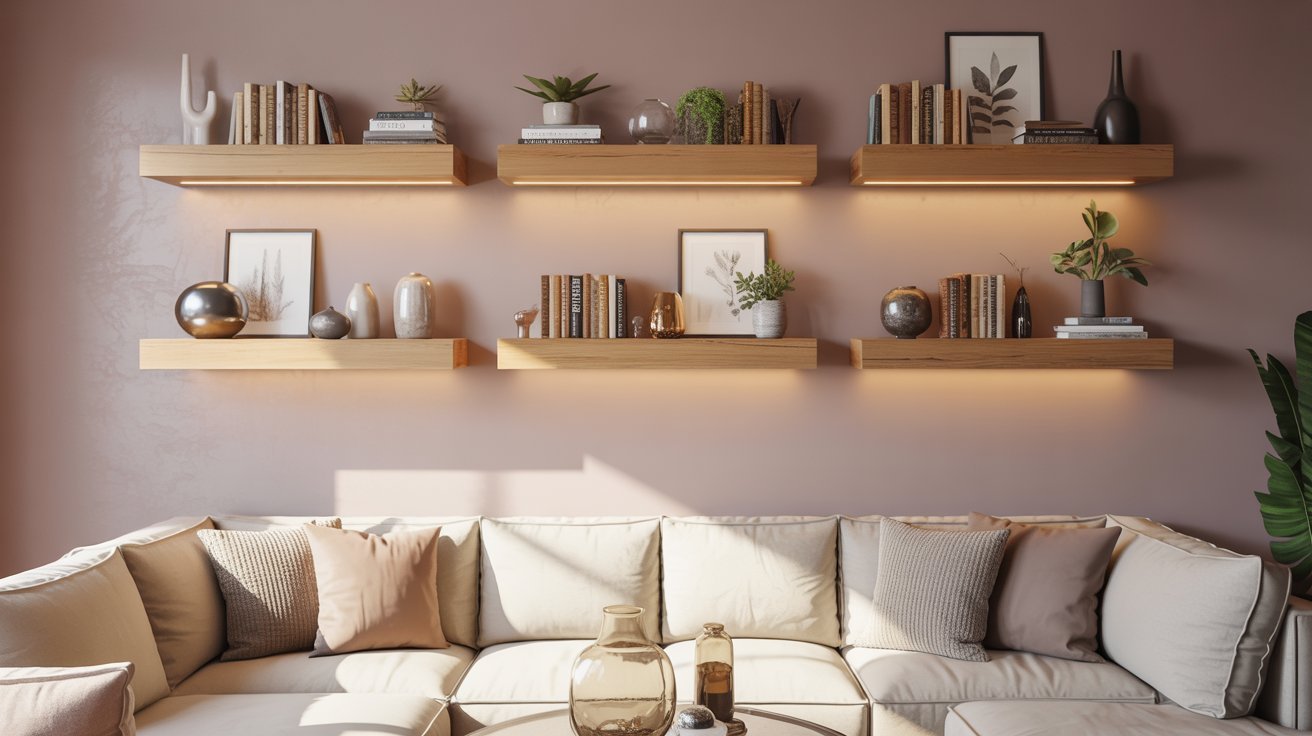
Every room has different needs, and your living room is no exception.
Living Room Shelf Layout Ideas
Your living room shelves should look good and work well together.
When planning the distance between floating shelves in the living room, think about what you’re placing on them.
Books need more vertical space, while decor can sit closer. A mix of both works best with 12 to 16 inches between shelves.
Matching Shelf Spacing to Furniture
Furniture below your shelves sets the tone for the whole layout.
Shelves above a sofa should start at least 10 to 12 inches above the back of the couch. Above a media unit, a gap of 12 to 16 inches keeps things from feeling boxed in.
Creative Floating Shelf Arrangement Ideas
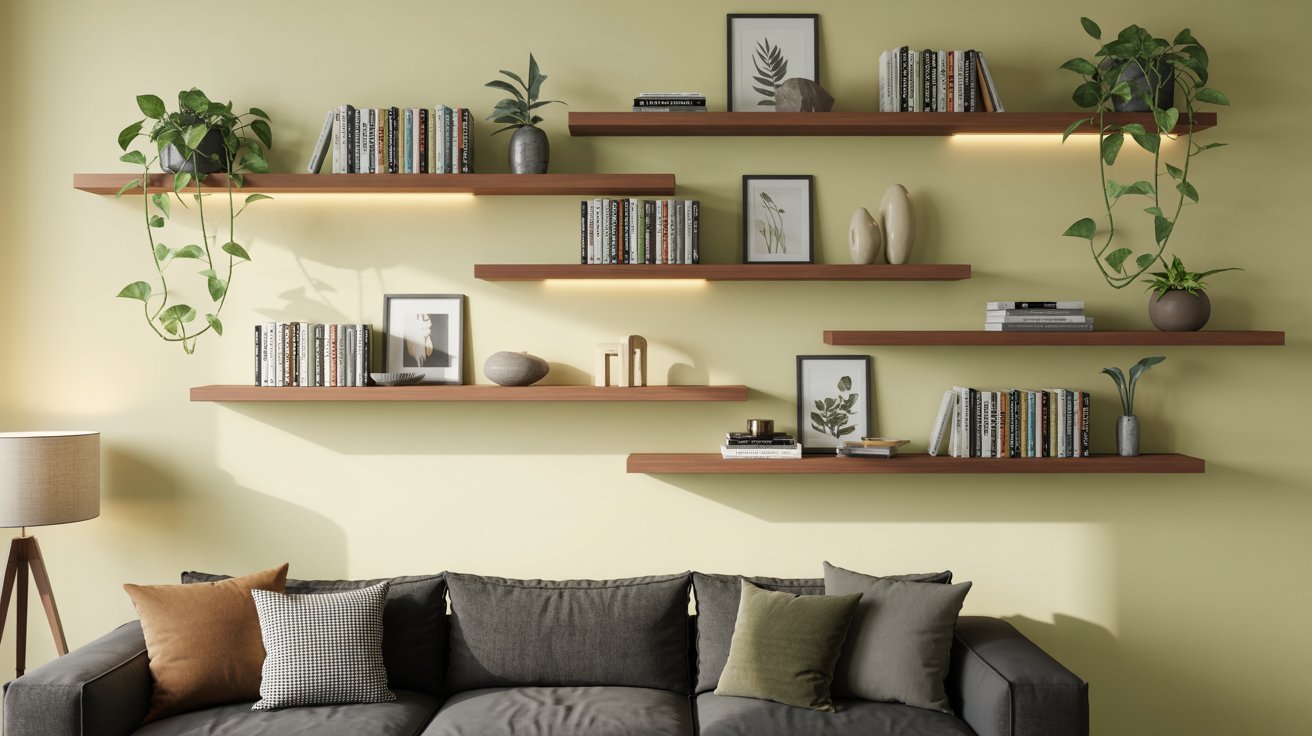
The way you arrange your shelves can completely change how a room feels.
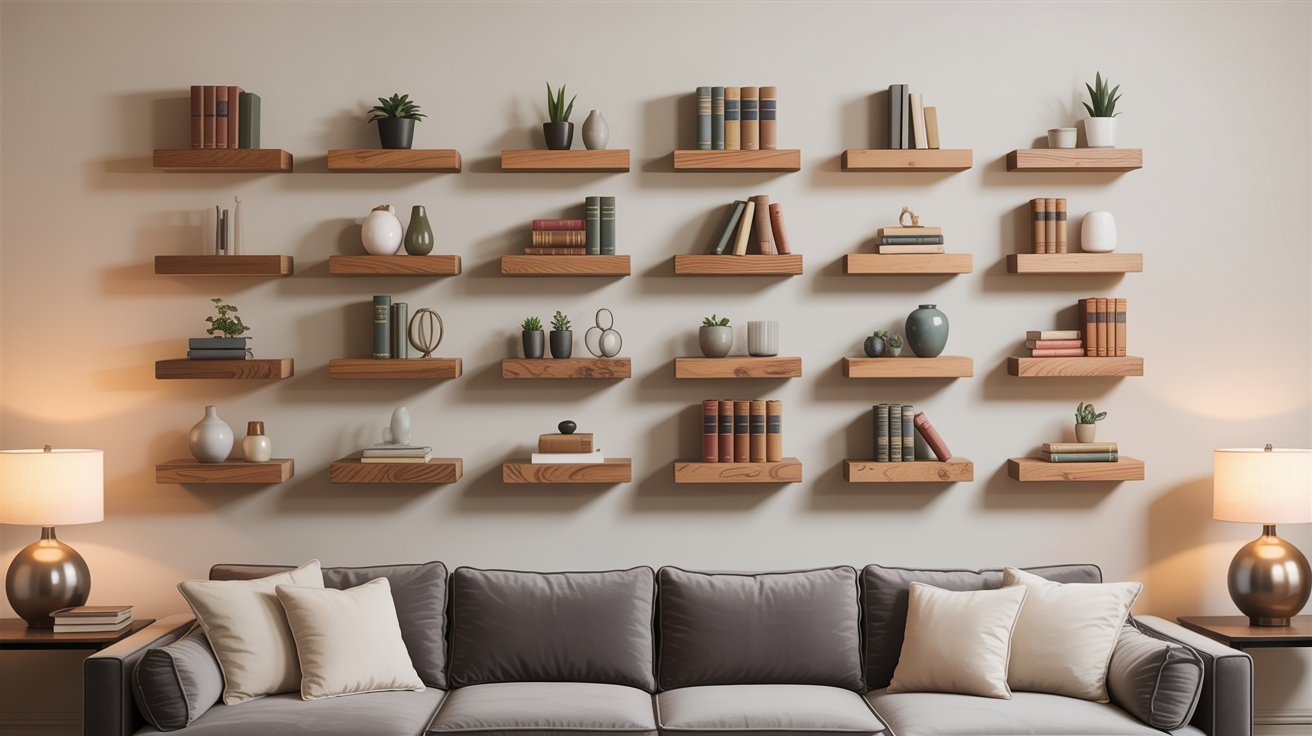
1. Symmetrical Arrangements
Even spacing on both sides creates a clean, classic look.
Place shelves at equal heights and distances on each side of a wall. This style works well in traditional or minimalist living rooms and is easy to keep tidy.
2. Asymmetrical Arrangements
Staggered shelves give a more modern and relaxed feel.
Place shelves at different heights for a personal, dynamic look. It works great for mixing books, plants, and decor without feeling rigid.
3. Stacked Shelves
Vertical stacking is perfect for narrow walls.
Keep 10 to 12 inches between stacked shelves. This draws the eye upward and makes the most of limited wall space.
4. Corner and Wrapped Shelving
Corner shelves make great use of space that often goes unused.
Wrap shelves around two walls for a seamless, continuous look. Keep the spacing consistent as they turn the corner for a neat finish.
Materials and Shelf Types for Living Rooms
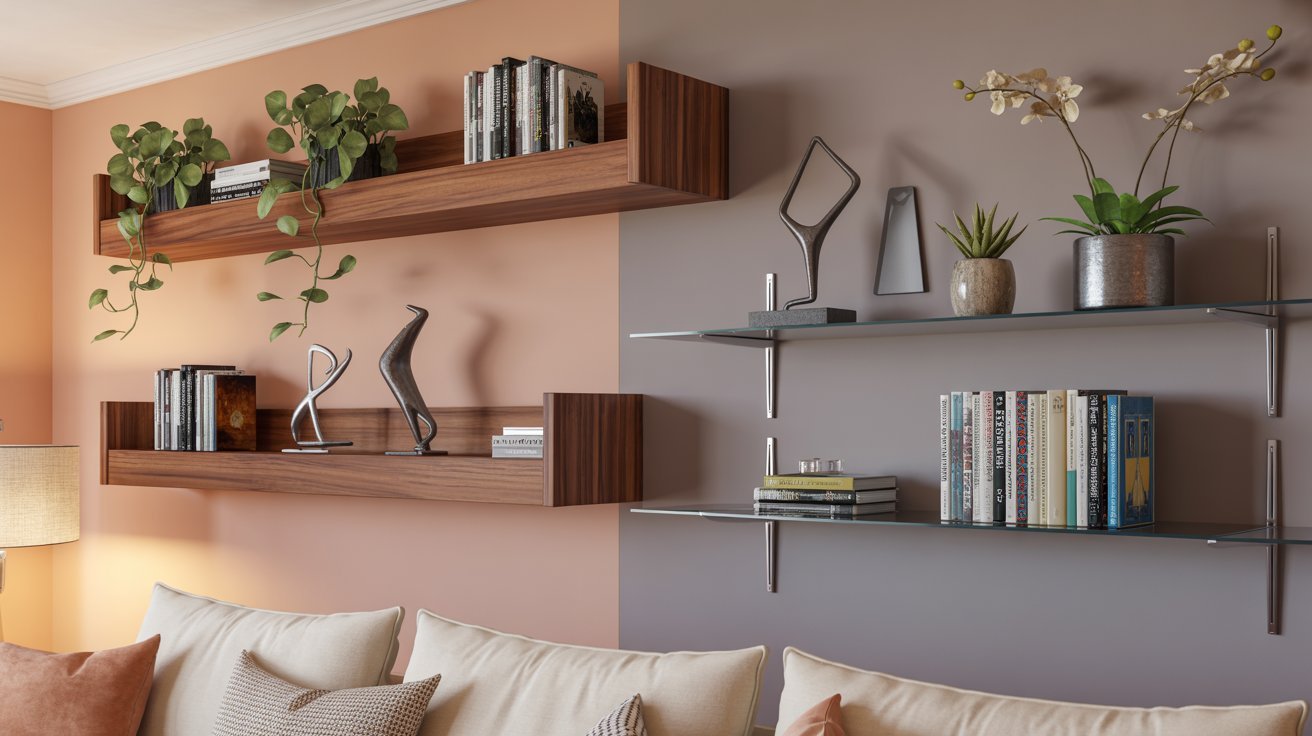
Choosing the right material affects how your shelves look, how long they last, and how much weight they can hold.
Solid Wood Floating Shelves
Solid wood is a go-to choice for living rooms that need both strength and style.
Solid wood shelves are durable, hold weight well, and look great in almost any living room. They cost more than other options but last much longer with proper care.
MDF or Plywood Shelves
A practical option that works well without breaking the budget.
MDF and plywood shelves are affordable and easy to paint in any color. They work well for lighter items but are not as strong as solid wood.
Decorative and Rustic Shelf Styles
The right style can tie the whole room together.
Reclaimed wood adds warmth and character. Hand-scraped styles give a natural, textured look. Modern designs keep things clean and minimal. Pick a style that fits the overall feel of your living room.
Care and Maintenance of Floating Shelves
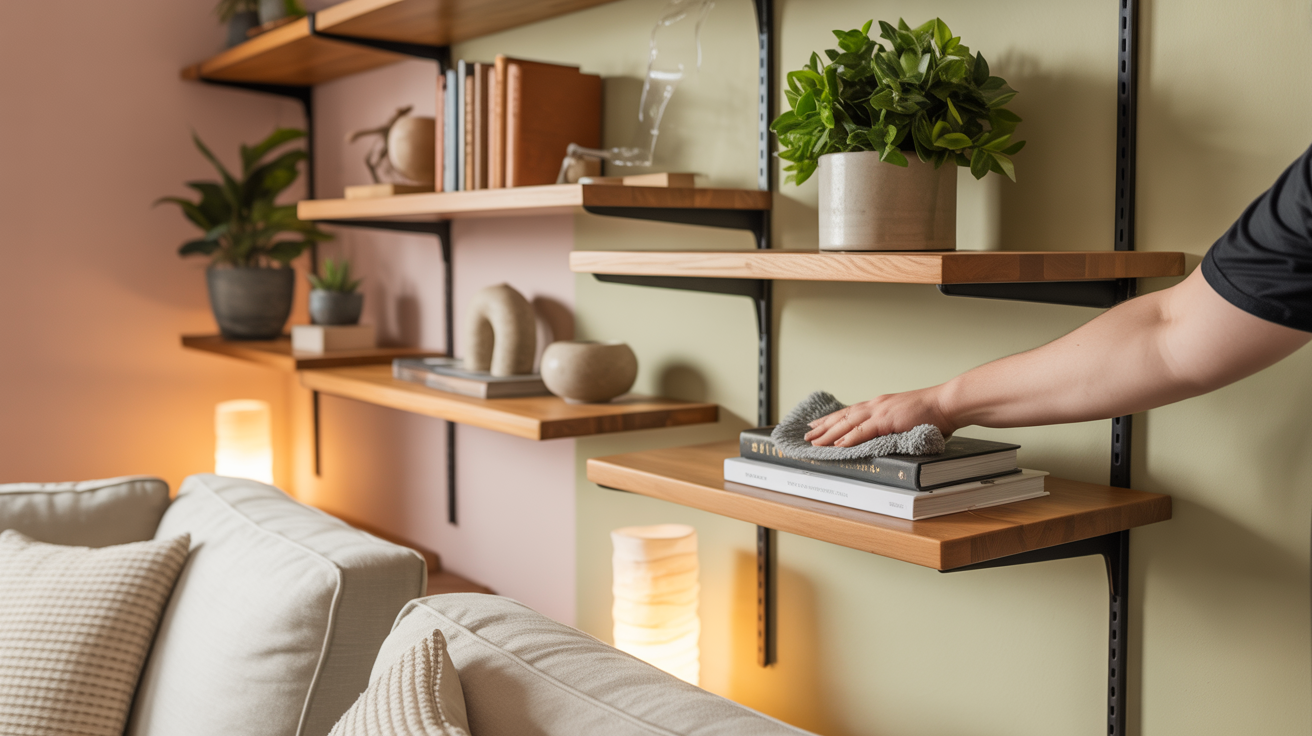
A little regular care goes a long way in keeping your shelves looking good and staying secure.
Avoid overloading your shelves. Every shelf has a weight limit, and pushing past it causes sagging over time. Spread heavier items across multiple shelves to keep things balanced.
Clean wood surfaces with a dry cloth and use a wood polish every few months to keep the finish in good shape. For other materials, a simple wipe down is enough.
Every few months, check for loose screws and tighten them right away. Look for any signs of sagging or pulling from the wall. Catching small issues early saves you from bigger repairs later.
How to Measure and Install Floating Shelves
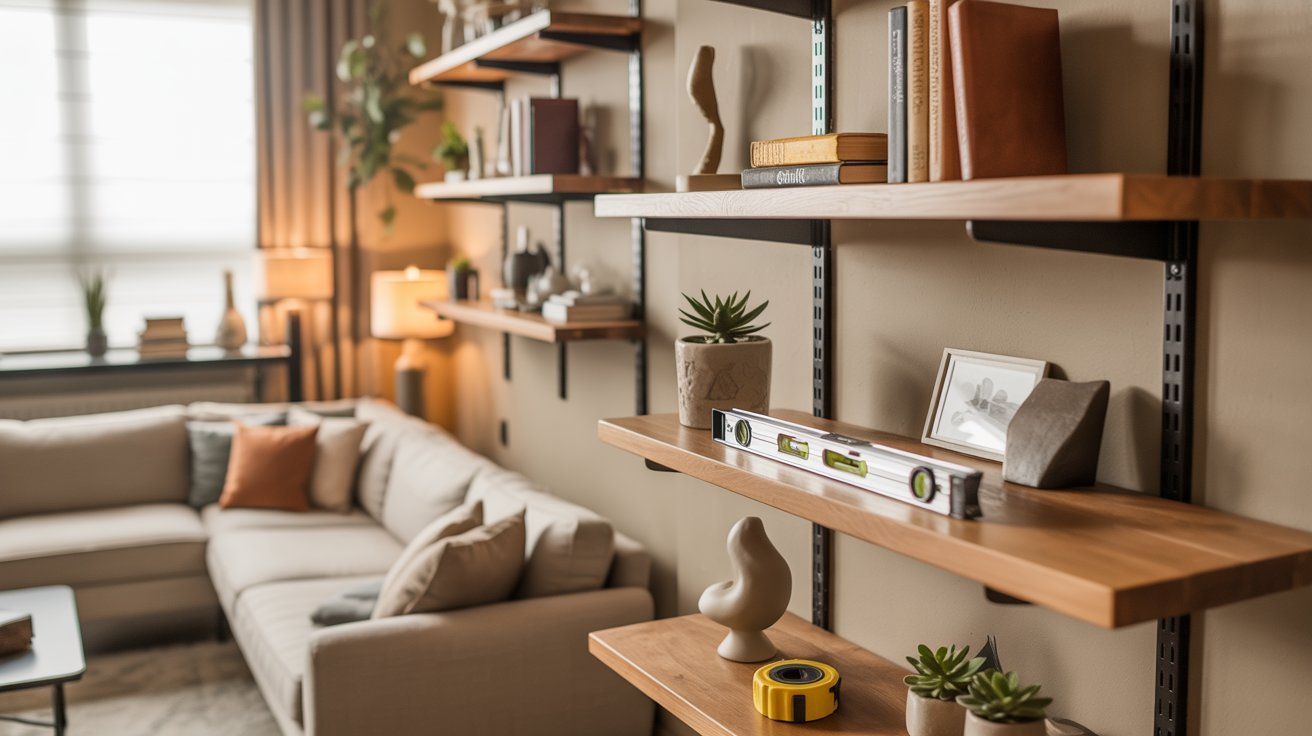
Taking your time here means shelves that stay level, safe, and secure.
Before you start, get your tools ready. You’ll need a stud finder, a level, a drill, wall anchors, screws, brackets, a measuring tape, and a pencil. Having everything within reach makes the job much faster.
Mark the height of your first shelf with a pencil, then measure up or down for the next one. Use a level at every step to keep things straight.
Find your wall studs with the stud finder and screw brackets directly into them for the strongest hold. If studs aren’t in the right spot, use heavy-duty wall anchors.
Attach the brackets, slide the shelf into place, and check the level one last time before tightening fully. Take it slow and you’ll end up with shelves that look great and stay secure.
Tips for Achieving the Perfect Distance
A few simple habits make a big difference in how your shelves turn out.
- Measure the tallest item first, then add 2 inches for clearance
- Leave some empty space on each shelf so it doesn’t feel crowded
- Keep a consistent style across all shelves, even if spacing varies
- Revisit the distance between floating shelves in living room as your decor changes
- Don’t rush the planning stage, a few extra minutes of measuring saves hours of fixing
Conclusion
Planning the distance between floating shelves in the living room doesn’t have to be complicated.
With the right measurements and a little patience, you can create a wall display that looks great and works even better.
I remember spending an afternoon moving painter’s tape up and down before drilling a single hole. It felt tedious, but the result was worth it.
Try it yourself. Drop a comment below and share how your shelf setup turned out!
Frequently Asked Questions
What Height Should Floating Shelves Be in a Living Room?
The first shelf should sit at eye level, around 57 to 60 inches from the floor. This keeps items visible and easy to reach without straining.
How Far Apart Should Floating Shelves Be for Books and Decor?
For books, leave about 14 to 16 inches between shelves. For smaller decor items, 10 to 12 inches is usually enough room.
How Thick Should Floating Shelves Be?
A shelf thickness of 1.5 to 2 inches works well for most living room displays. Thicker shelves handle heavier items better and look more solid on the wall.
How to Strengthen Floating Shelves for Heavy Items?
Use brackets screwed directly into wall studs for the strongest hold. Heavy-duty anchors can also work, but stud mounting is always the more secure option.
Can You Mix Different Shelf Spacings on the Same Wall?
Yes, mixing spacing is a common design choice. Plan the layout with painter’s tape before installing to make sure the variation looks intentional.