I used to think pattern was just about picking a nice print and calling it a day. Then I started actually paying attention to how rooms felt with and without it.
The difference was huge. A plain room can feel flat no matter how good the furniture is.
But add the right pattern on a rug, a cushion, or a wall, and the whole space shifts.
If you have been wondering how to use pattern without overdoing it, this guide breaks it all down for you.
What Is Pattern in Interior Design?
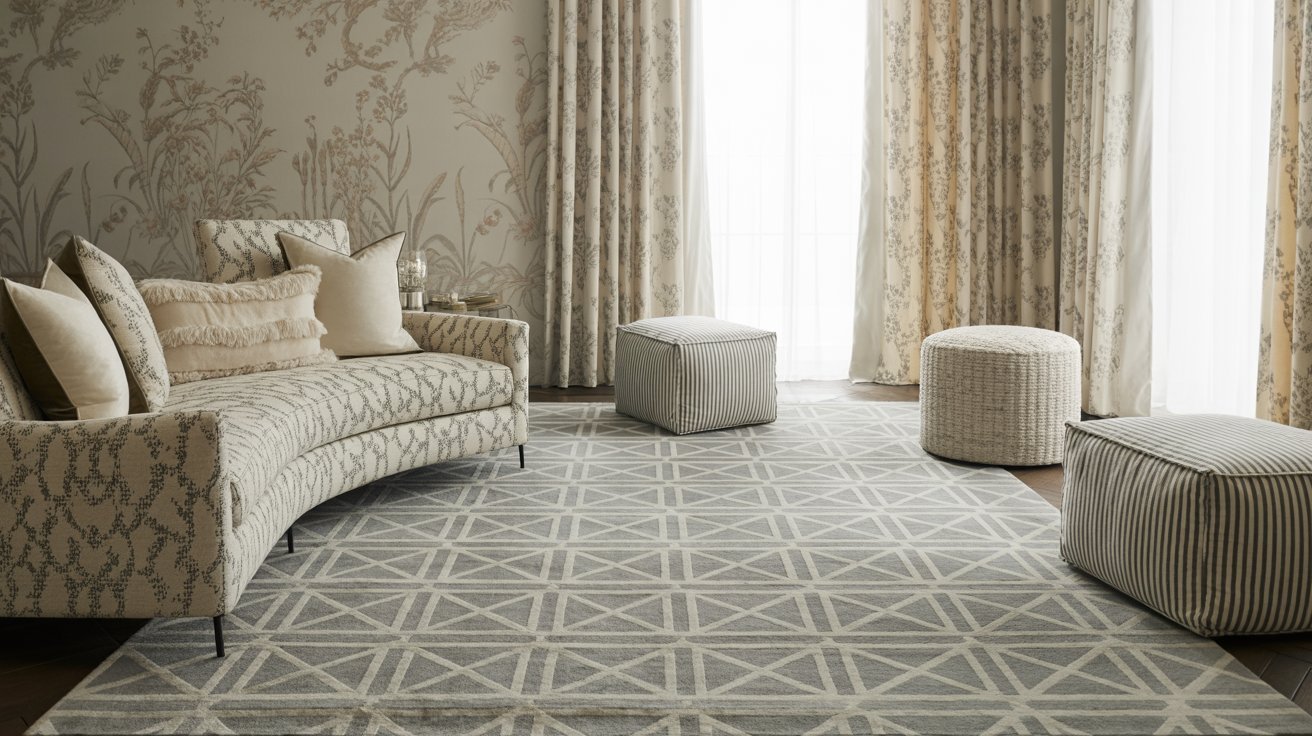
Pattern in interior design is the repeated use of shapes, colors, lines, or motifs across surfaces like walls, floors, and fabrics. It adds rhythm and structure to a room, making it feel intentional and well put-together.
Without pattern, a space can feel flat and forgettable. It gives rooms character, ties different elements together, and guides the eye around the space.
The right pattern can make a small room feel bigger, a plain space feel lively, and a simple setup feel like it actually has a point of view.
Why Pattern Matters in Interior Design
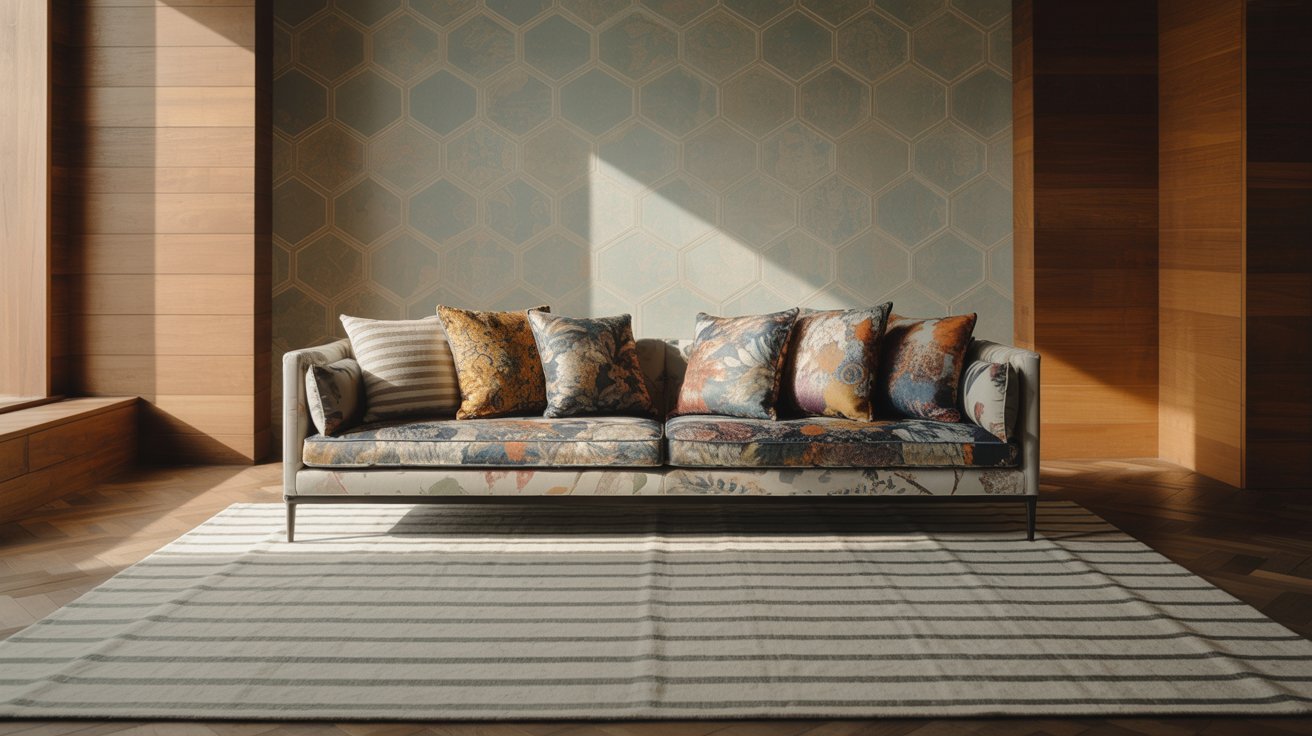
Pattern does more than decorate a room. It adds depth, creates movement, and gives a space its own personality. A striped rug pulls the eye across the floor. A geometric wallpaper makes a flat wall feel layered.
It also says something about who lives there. Bold florals, clean lines, or mixed prints all tell a different story.
And when used right, pattern connects everything. It links colors, balances textures, and gives form to a room that might otherwise feel random or incomplete.
The Most Popular Types of Patterns Used in Interior Design
Pattern is the repeated use of shapes, colors, or motifs across a room’s surfaces. It adds rhythm, structure, and personality to any space.
Geometric Patterns (Stripes, Checks, Herringbone, and Chevron)
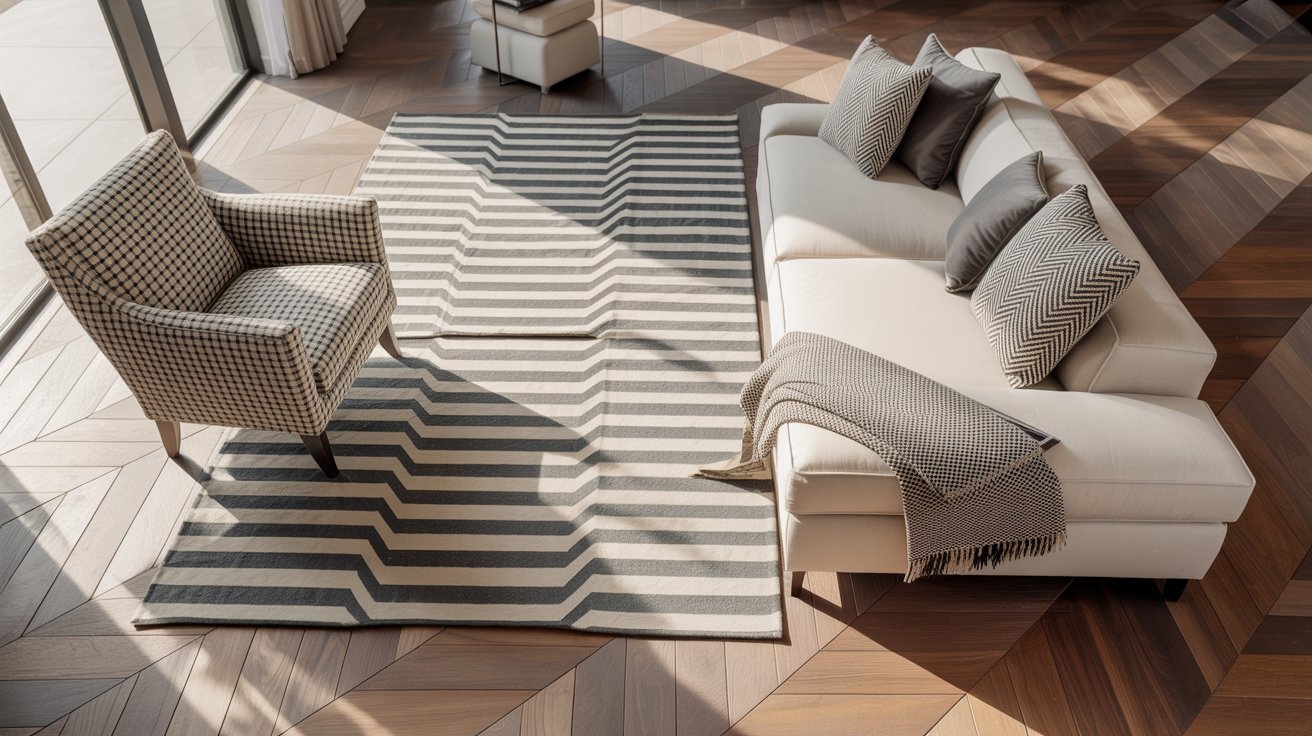
Geometric patterns are clean, structured, and easy to work with. Stripes make a room feel taller or wider depending on direction.
Checks suit both casual and formal spaces without much effort. Herringbone and chevron add visual movement and are popular choices for floors, rugs, tiles, and accent walls.
Organic Patterns (Florals, Botanicals, and Abstract Designs)
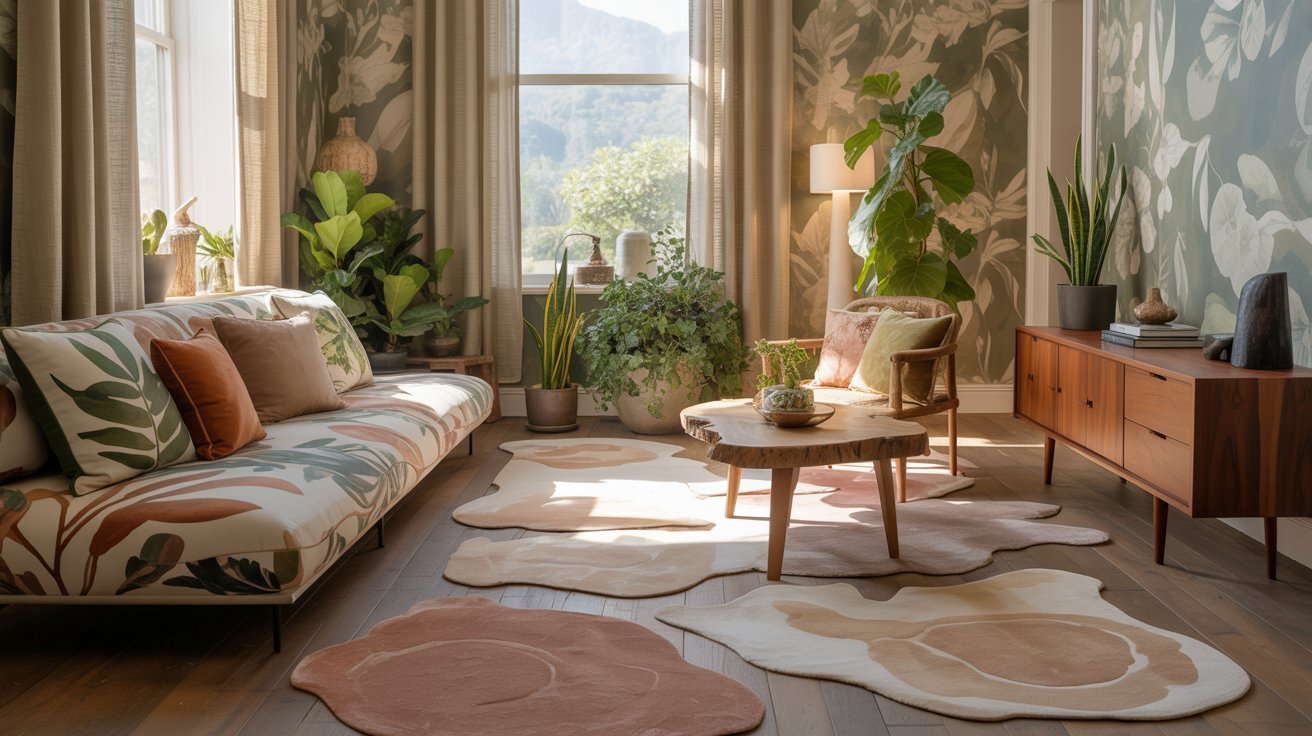
Florals and botanicals bring a soft, natural feel into any room. They work well on wallpaper, cushions, curtains, and bedding.
Abstract designs are more freeform and expressive. They suit modern or artistic spaces where you want something that feels less structured and more personal to the people living there.
Animal Prints for Bold and Exotic Style
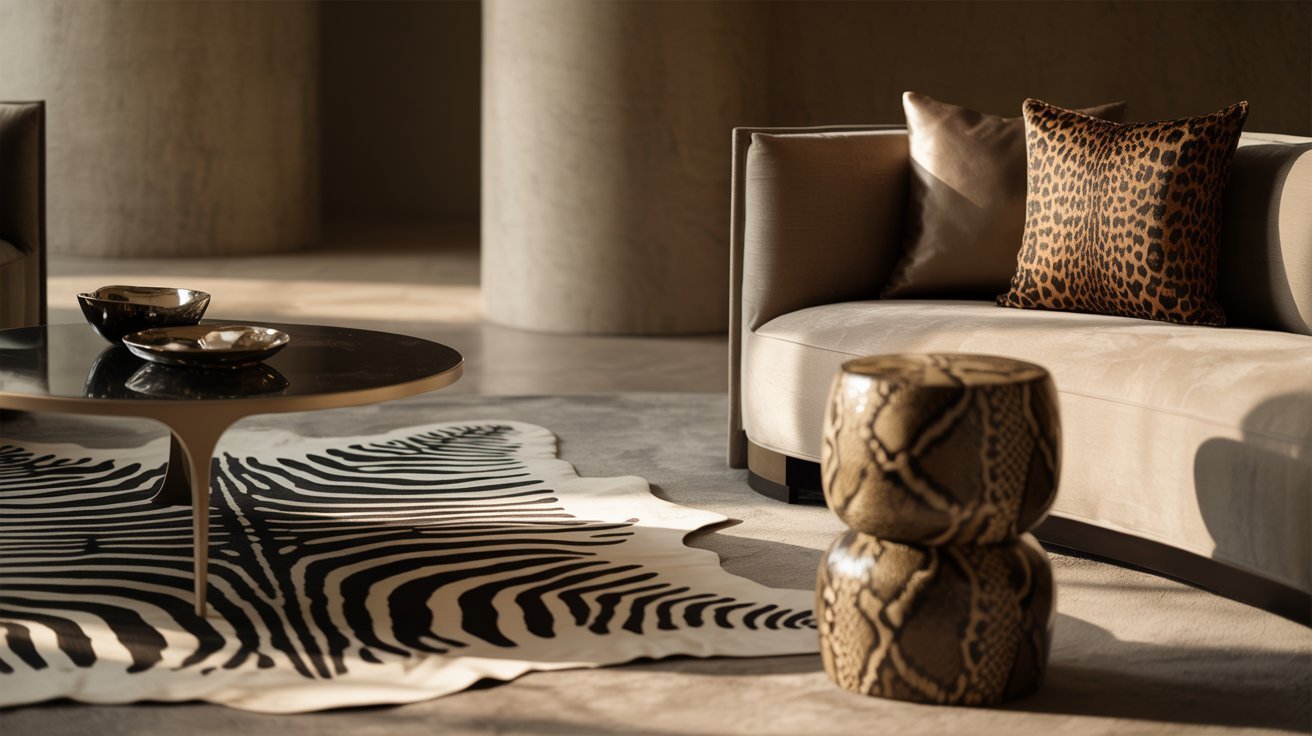
Leopard, zebra, and snake prints make a strong visual statement in any room. They work best as accents rather than the main focus.
A single leopard cushion or zebra-print rug adds personality and edge.
Use them in small doses and they pull a room together without making it feel overdone or chaotic.
Classic Patterns Like Paisley, Plaid, and Ikat
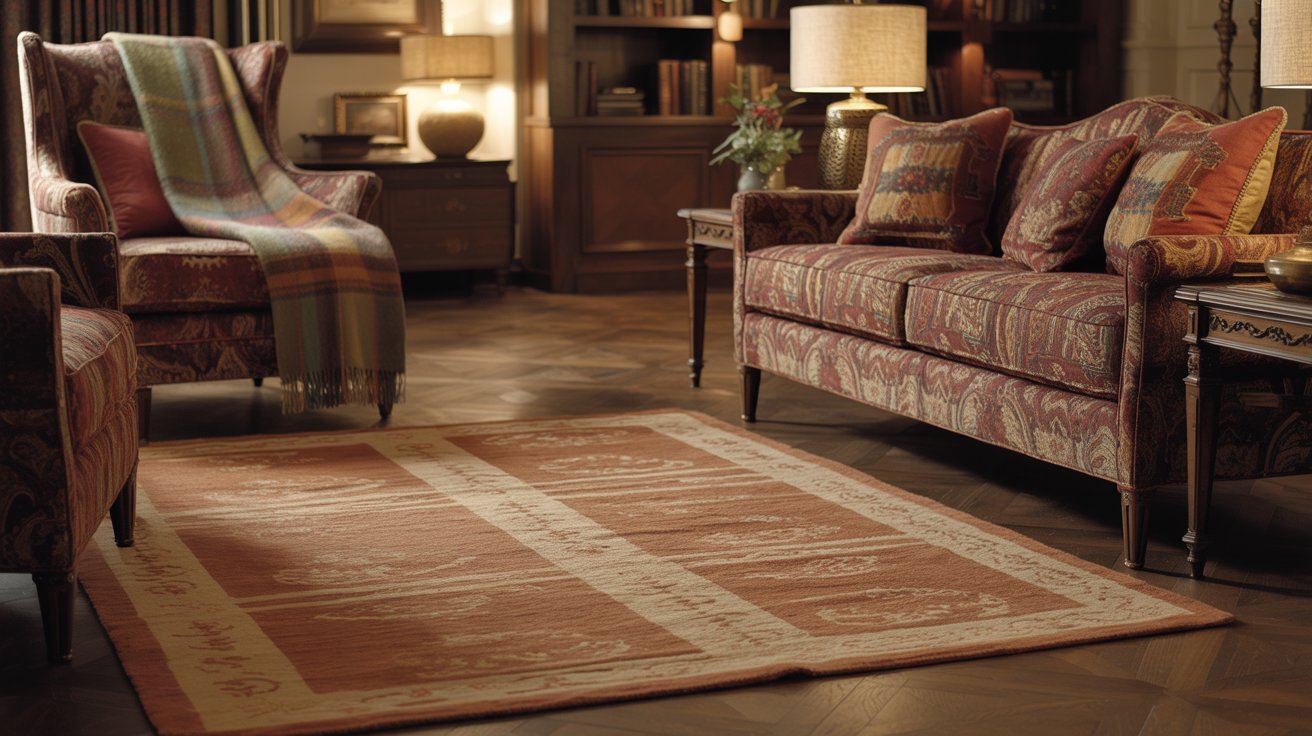
Paisley has a curved teardrop shape rooted in South Asian design. It suits cushions, throws, and soft furnishings really well.
Plaid feels warm and grounded, making it a go-to for cozy, traditional interiors. Ikat uses blurred, dye-resist patterns that give spaces a handcrafted, artisanal quality that feels one of a kind.
How to Choose the Right Pattern for Your Interior Style
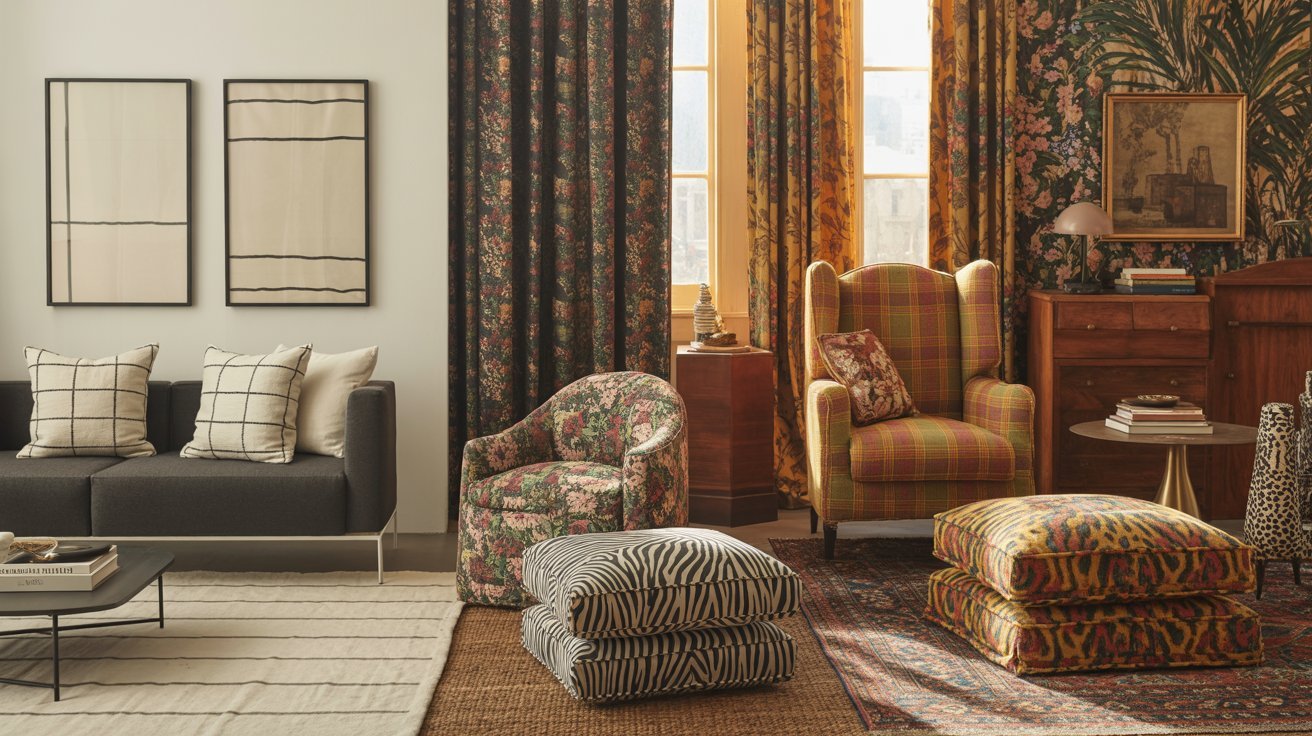
Choosing the right pattern depends on the style you’re going for.
Modern and contemporary interiors work best with geometric shapes, clean lines, and minimal repeats. Think simple grids, subtle textures, or abstract prints in neutral tones.
Traditional spaces suit classic patterns like florals, paisleys, and plaids. Rich colors and detailed repeats feel right at home here.
Eclectic and maximalist designs have more room to play. You can mix bold prints, layer different scales, and combine patterns that wouldn’t normally go together. The more varied, the better.
How to Introduce Pattern in Interior Design (Beginner-Friendly Tips)
- Start with small accents like cushions or a printed tray. They add pattern without committing to anything permanent or overwhelming.
- A patterned rug is one of the easiest ways to ground a room. It adds color, texture, and visual interest all at once.
- Throw pillows let you mix prints without a big investment. Swap them out seasonally to keep the space feeling fresh.
- Curtains with a subtle print can frame a window beautifully. They add pattern at eye level without taking over the room.
- Patterned lampshades, small artworks, or printed accessories work as finishing touches. They tie the room together and make it feel complete.
How to Mix Patterns in Interior Design Like a Designer
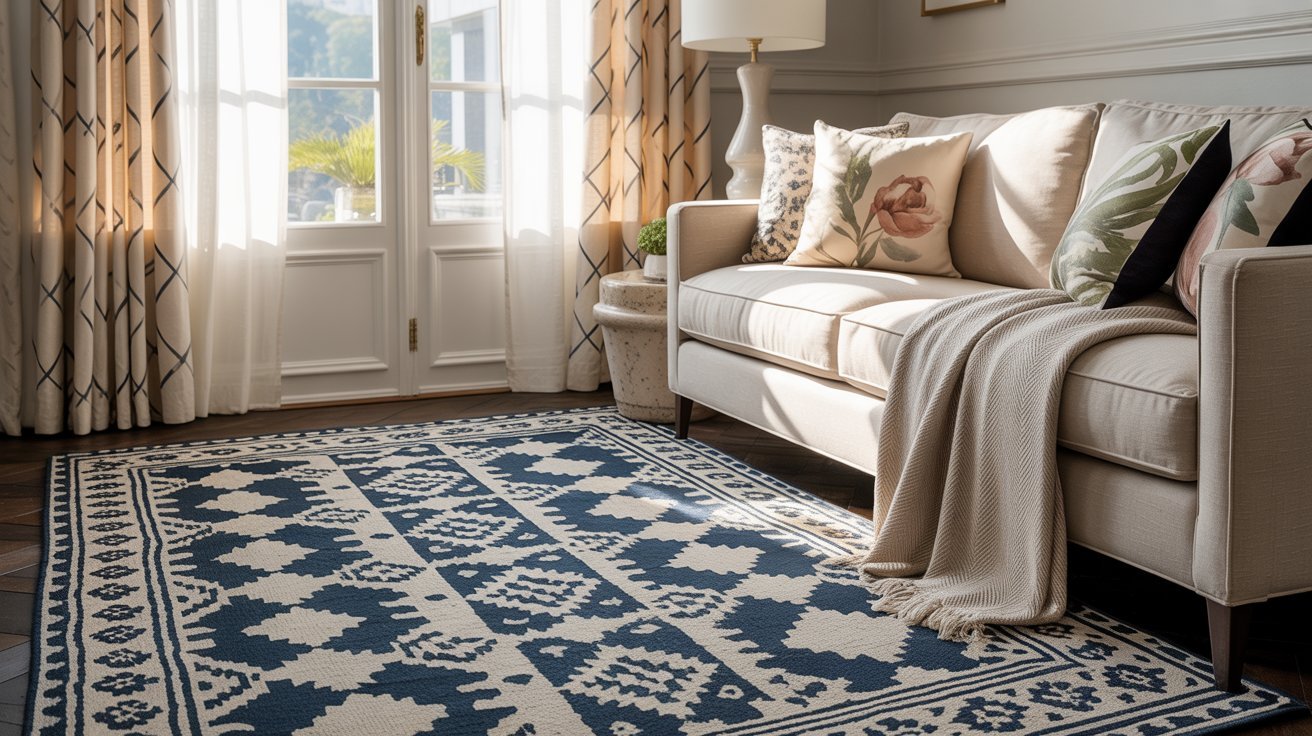
Mixing patterns works when you follow a few simple rules. Pair a geometric print with a floral or organic one. The contrast between structured and free-form keeps things balanced.
Scale matters too. A large bold print works well next to a smaller, quieter one. When both patterns compete for attention, the room feels chaotic.
Layer patterns across different elements. Put one on the rug, another on the cushions, and a third on the curtains. Keep one pattern dominant and let the others play supporting roles.
Use Color Palettes to Create Cohesion
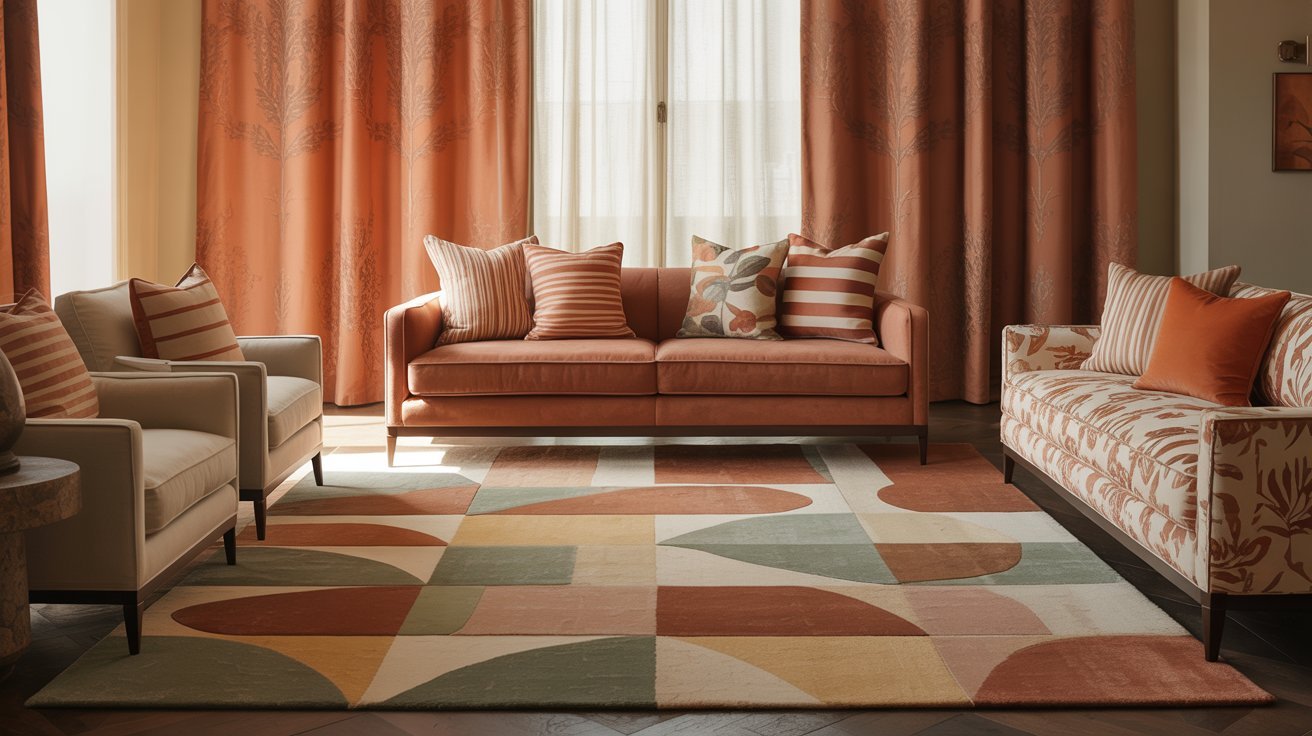
A consistent color palette is what keeps mixed patterns from looking messy. When different prints share the same colors, they feel connected even if the designs are completely different.
Pick one hero pattern first. This is your main print, the one that sets the tone for the whole room. Everything else should pull from the colors in that pattern.
It makes decision-making easier too. Once your hero pattern is set, you know exactly what shades to repeat across your cushions, rugs, curtains, and walls.
Where to Use Pattern in Interior Design
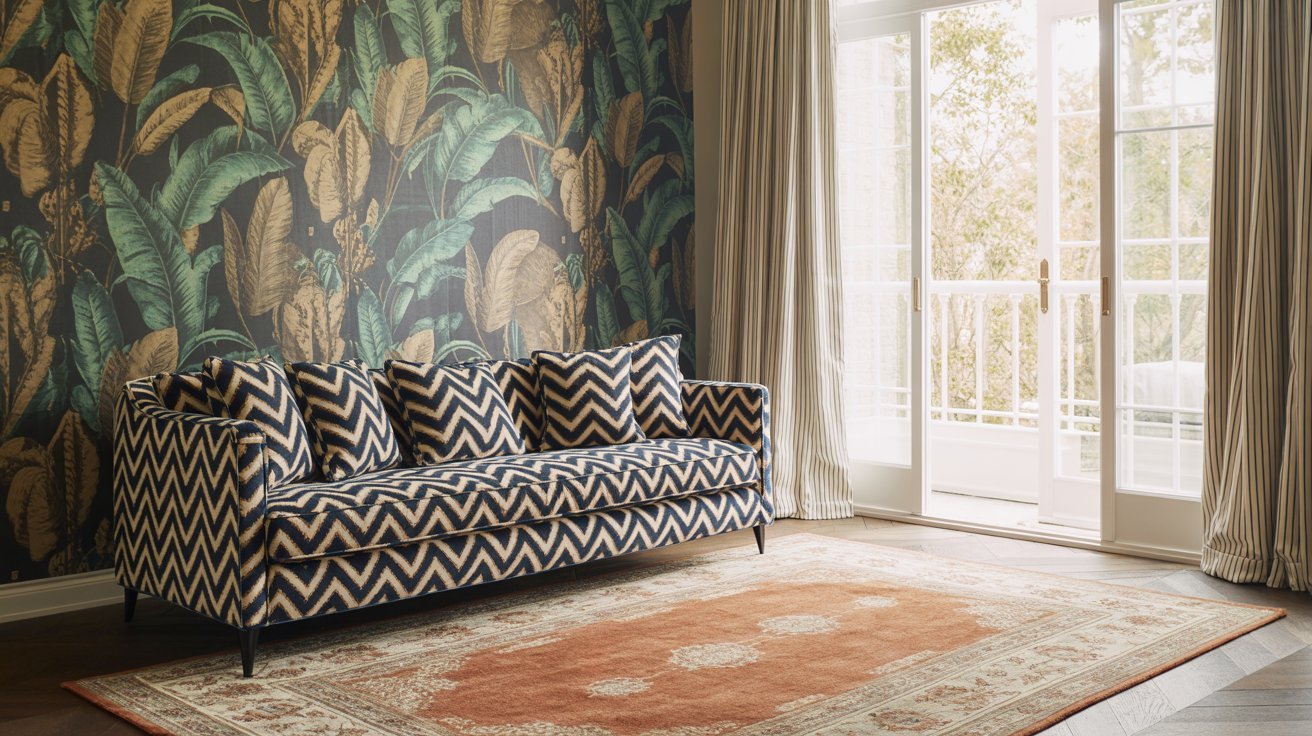
Pattern works best when placed with intention. Here are the key areas in a room where it makes the biggest impact.
Patterned Furniture as a Focal Point
A patterned sofa, armchair, or headboard can anchor an entire room. It draws the eye immediately and sets the tone for everything around it.
Keep the surrounding pieces simpler so the furniture gets the attention it deserves without the space feeling too busy.
Wallpaper and Feature Walls
A patterned wallpaper on a single wall is one of the most effective ways to add character to a room.
It creates a strong focal point without covering every surface. Bold prints work well behind a bed or sofa where they can be seen clearly.
Patterned Rugs, Curtains, and Upholstery
Rugs, curtains, and upholstery are the most flexible places to introduce pattern. They can be changed without major effort or cost.
A printed rug defines a seating area. Patterned curtains frame a window and add height. Upholstery on dining chairs or an accent chair adds personality to everyday pieces.
Expert Tips for Using Pattern Confidently
- Pair opposite pattern styles for the best results. A bold geometric next to a soft floral creates contrast that feels intentional and balanced.
- Don’t be afraid to layer patterns on top of each other. A printed rug under a patterned sofa works when the colors are kept consistent.
- Use contrast in scale to avoid visual clutter. One large print paired with a smaller, quieter one keeps the room feeling controlled.
- Pattern can highlight a key area of the room. Use it on a headboard, fireplace wall, or reading nook to draw attention where you want it.
- Trust your eye and test before committing. Lay fabric samples together or use peel-and-stick wallpaper to see how patterns interact in your actual space.
Conclusion
Pattern is one of those things that genuinely changes how a room feels. I’ve seen plain spaces come alive with just a printed rug or a bold wallpaper. It doesn’t take much.
The key is balance. Mix scales, stick to a shared color palette, and let one pattern lead.
Start small if you’re unsure. Build from there. Once you see how pattern pulls a room together, you won’t want to stop.
Which pattern style are you drawn to? Drop it in the comments!
Frequently Asked Questions
What is pattern in interior design?
Pattern in interior design refers to the repeated use of shapes, colors, lines, or motifs on surfaces like walls, floors, and fabrics. It adds structure, rhythm, and personality to a room.
How do I mix patterns without making a room look cluttered?
Stick to a shared color palette and vary the scale of your prints. One large pattern paired with a smaller one keeps things balanced and easy on the eye.
What are the most common types of patterns used in interiors?
Geometric, floral, abstract, animal print, plaid, paisley, and ikat are among the most widely used. Each brings a different mood and works better in certain spaces than others.
Where is the best place to start adding pattern to a room?
Start with soft furnishings like cushions, a rug, or curtains. They are low commitment, easy to swap out, and a great way to test what works in your space.
Can I use pattern in a small room without making it feel cramped?
Yes, smaller and lighter prints actually work well in compact spaces. Avoid oversized bold prints on every surface and stick to one or two well-placed patterns to keep the room feeling open.